


Head and neck cancer can present as a lump in the neck, a change in the voice, a mouth ulcer that will not heal, or discomfort on swallowing. Many of these symptoms have causes other than cancer, but a symptom that persists or is unexplained should be assessed.
A symptom becomes concerning when it persists rather than settling within a couple of weeks. The following symptoms should not be ignored if they continue.
Many of these symptoms have causes other than cancer. Persistence is one reason they should be assessed. A sore throat that settles within a short period is less concerning than one that continues for several weeks without a clear cause. Symptoms alone cannot reliably distinguish a benign condition from cancer, which is why persistent or unexplained symptoms should be reviewed.

Tobacco use and heavy alcohol use, particularly together, remain established risk factors for several head and neck cancers. Separately, cancers of the tonsil and base of tongue linked to Human Papillomavirus (HPV) are increasingly seen in people without a smoking or heavy drinking history, sometimes presenting first as a painless neck lump with few throat symptoms. Anyone with a persistent symptom should be assessed regardless of whether these risk factors apply, as head and neck cancer can occur without them.

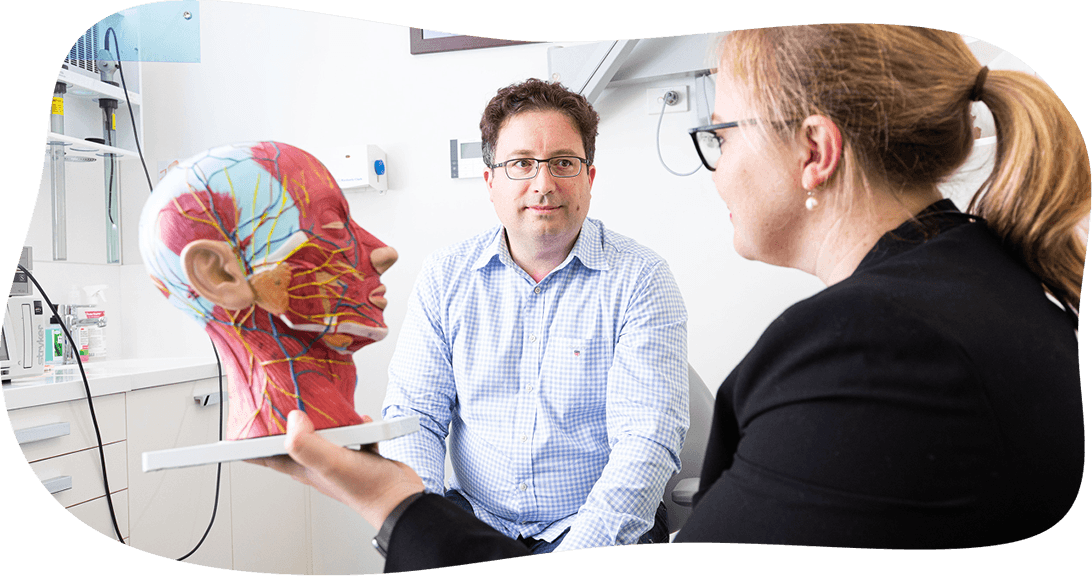
The first appointment starts with a conversation about the symptom, how long it has been present, and relevant medical history. This is followed by examination of the mouth and neck.
Flexible nasendoscopy is usually performed during the same visit. A thin, flexible telescope is passed through the nose, under local anaesthetic spray, to examine the throat, voice box and surrounding structures. It takes a few minutes and can feel a little uncomfortable but is not typically painful.
If an abnormality is found, a biopsy is usually needed to reach a diagnosis. For a neck lump, this is often an ultrasound-guided needle biopsy arranged through a radiology practice. For an abnormality in the mouth, throat or voice box, biopsy may be performed in the clinic or under general anaesthesia depending on the location. Imaging such as CT, MRI or PET-CT may also be arranged, depending on what is found. Not every patient needs every type of scan.
Bring any previous imaging, biopsy or pathology results and a current medication list to the appointment where possible, as this helps avoid repeating tests unnecessarily.

Selecting the right specialist is the most critical decision in your care pathway. Dr Crawford offers a unique combination of international expertise and compassionate, patient-centred care.
Patients with a persistent or unexplained head and neck symptom can be seen at Sydney ENT Clinic in Darlinghurst or Kogarah, or through Chris O'Brien Lifehouse. Bring any previous imaging, biopsy or pathology results and a current medication list where possible. A valid referral from your GP or another medical specialist is required to claim Medicare rebates.

Our team can assist with appointment enquiries and help arrange a consultation with Dr Julia Crawford at one of her three Sydney consulting locations:
Dr Julia Crawford consults for head and neck conditions, head and neck cancer, thyroid and salivary gland disease, obstructive sleep apnoea, paediatric ENT and selected general ENT problems.
Her team can assist with arranging an appointment at Darlinghurst, Kogarah or Chris O'Brien Lifehouse, and will help ensure the appropriate information and investigations are available before your consultation.