Tonsils, Adenoids & Recurrent Tonsillitis

Tonsil and Adenoid Problems in Children

Tonsil and adenoid problems are among the most common reasons children are referred to an ENT surgeon.

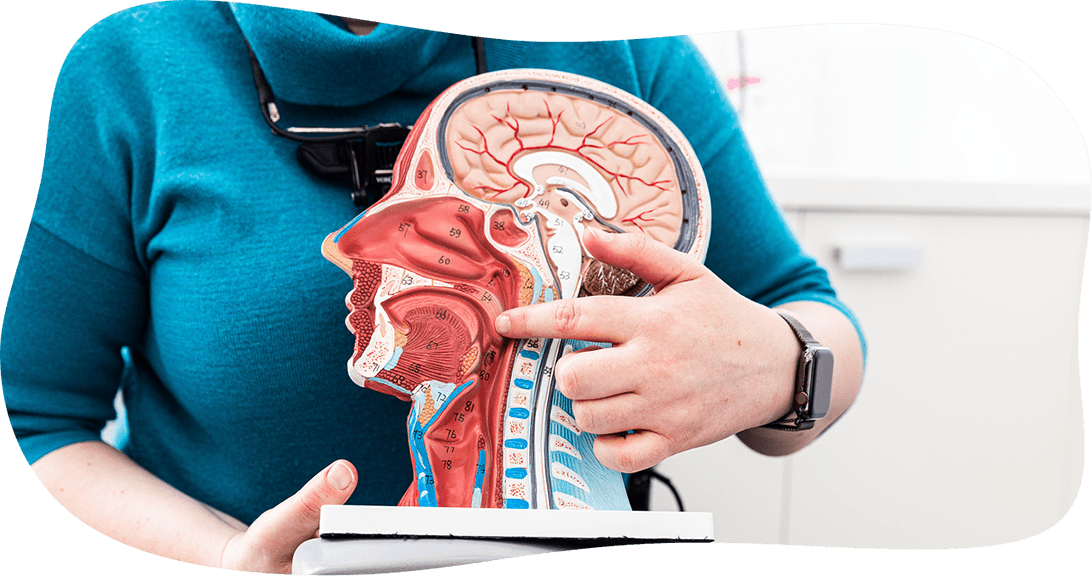
The tonsils are areas of lymphoid tissue at the back of the throat. The adenoids are similar tissue located behind the nose.

Problems can arise because the tonsils or adenoids are enlarged, repeatedly infected, or both.
What’s On This Page

What problems can enlarged tonsils and adenoids cause?

They may contribute to:

  • recurrent tonsillitis
  • snoring
  • sleep-disordered breathing
  • obstructive sleep apnoea
  • restless or disrupted sleep
  • persistent mouth breathing
  • nasal obstruction
  • difficulty swallowing when the tonsils are very large
  • recurrent middle-ear problems in some children
Not every child with large tonsils or adenoids needs surgery.

The important question is whether they are causing symptoms that significantly affect the child's sleep, health or day-to-day life.

Recurrent tonsillitis

Tonsillitis is common in childhood and occasional episodes usually do not require surgery.


Tonsillectomy may be considered when infections become:

  • frequent
  • severe
  • associated with repeated antibiotic treatment
  • associated with hospital presentations
  • responsible for significant time away from school or childcare
  • disruptive to the child and family
Dr Crawford will usually ask about the overall pattern of illness rather than applying a decision based simply on tonsil size.

The assessment includes how frequently infections occur, their severity, treatment required and the effect on the child and family.

When is tonsillectomy considered?

Tonsillectomy in children is most commonly considered for:

  • recurrent or severe tonsillitis
  • obstructive sleep apnoea
  • significant sleep-disordered breathing associated with enlarged tonsils
The decision is individualised.

Surgery is generally recommended when the likely benefit outweighs the recovery and risks of the procedure.

Intracapsular and extracapsular tonsillectomy

There are two main ways of performing a tonsillectomy in children: intracapsular tonsillectomy and extracapsular tonsillectomy.


Dr Crawford performs both techniques. The most appropriate operation depends on why surgery is being performed and the individual child.
With an intracapsular tonsillectomy, most of the tonsil tissue is removed but a very thin layer is deliberately left over the muscle of the throat.

The main advantages are generally:
  • less postoperative pain
  • faster return to normal eating and activity
  • a lower risk of postoperative bleeding
For this reason, intracapsular tonsillectomy can be particularly attractive for children undergoing surgery for enlarged tonsils, snoring or obstructive sleep apnoea.

The trade-off is that a small amount of tonsil tissue remains.

This means there is a small possibility that the remaining tonsil tissue may enlarge again over time. Some children may also continue to experience tonsil infections or develop problems related to the residual tonsil tissue.

A small proportion of children may eventually require further tonsil surgery.

With an extracapsular tonsillectomy, the tonsil and its surrounding capsule are removed completely from the tonsil bed.

Recovery is generally more painful than after intracapsular surgery and the risk of postoperative bleeding is higher.

However, because essentially all of the tonsil tissue is removed, extracapsular tonsillectomy is generally preferred when the main problem is:
  • recurrent or severe tonsillitis
  • recurrent tonsil-related infection
  • tonsil stones
  • another reason where leaving residual tonsil tissue would be undesirable

Neither technique is inherently better for every child.

The choice involves balancing:
  • the reason for surgery
  • the child's age and medical history
  • the importance of reducing postoperative pain and bleeding risk
  • the likelihood of future tonsil infections
  • the small risk of tonsil tissue regrowth or revision surgery after an intracapsular procedure
For a child undergoing surgery primarily for sleep-disordered breathing or obstructive sleep apnoea, Dr Crawford may discuss intracapsular tonsillectomy as an option.

Where recurrent tonsillitis is the main indication for surgery, complete extracapsular tonsillectomy will often be more appropriate.

Dr Crawford will discuss the advantages and disadvantages of both techniques with you before surgery and recommend the approach that best fits your child's particular circumstances.

What is an adenoidectomy?

Adenoidectomy involves removing or reducing enlarged adenoid tissue from behind the nose.


It may be considered for children with:

  • significant nasal obstruction
  • persistent mouth breathing
  • snoring or sleep-disordered breathing
  • obstructive sleep apnoea
  • some middle-ear problems where enlarged adenoids are contributing
The adenoids are accessed through the mouth, so there are no external incisions.

Adenoidectomy may be performed alone or together with tonsillectomy or grommet insertion.

Tonsillectomy and adenotonsillectomy

A tonsillectomy removes the tonsils.


When the adenoids are also removed, the procedure is often called an adenotonsillectomy.


Tonsillectomy may be performed using either an intracapsular or extracapsular technique. Dr Crawford will discuss which approach is most appropriate depending on whether surgery is being performed primarily for sleep-disordered breathing, recurrent infection or another indication.


The adenoids are frequently removed at the same time as the tonsils when surgery is being performed for sleep-disordered breathing or nasal obstruction.


Paediatric tonsillectomy is a common operation, but the recovery is significant.


Dr Crawford will discuss:

  • why surgery is being considered
  • reasonable alternatives
  • expected recovery
  • pain management
  • bleeding risk
  • time away from school
  • postoperative care

Frequently Asked Questions

Tonsils are part of the immune system, but tonsillectomy has not been shown to cause a clinically significant long-term weakening of immune function.

It can be difficult to tell from symptoms alone. Tonsillitis can cause a sore throat, difficulty swallowing, fever and swollen glands in the neck, and the tonsils may appear red and swollen. Tonsillitis can be caused by viruses or bacteria, so medical assessment may be needed if symptoms are severe, persistent or recurring.

No. Children can still develop sore throats and other upper respiratory infections after tonsillectomy.

Dr Crawford sees children from 24 months of age through to 18 years. Children younger than 24 months, particularly those with complex airway, feeding, hearing or congenital problems, are usually better managed by a paediatric ENT subspecialist at one of Sydney's specialist children's hospitals.

Dr Crawford considers the frequency and severity of infections, treatment needed, time away from school and the effect on the child and family. Tonsil size alone does not determine whether surgery is appropriate.

Dr Crawford's public hospital appointments are for adult ENT and head and neck surgery only, and she does not have a paediatric public operating appointment. If your child needs surgery, this is performed in the private hospital system, or Dr Crawford can discuss referral to a public paediatric ENT service if that is not appropriate for your family.

A valid referral from your GP or another medical specialist is required to claim Medicare rebates.

Book a Paediatric Consultation

Dr Crawford sees children with recurrent tonsillitis and related conditions at Sydney ENT Clinic in Darlinghurst and Kogarah.

Details of previous episodes, including how often they occur and any hospital or GP treatment, are helpful to bring to the appointment. A valid referral from your GP or another medical specialist is required to claim Medicare rebates.

Get in Touch

Our team can assist with appointment enquiries and help arrange a consultation with Dr Julia Crawford at one of her three Sydney consulting locations:

Sydney ENT Clinic, Darlinghurst

Ground Floor, 67 Burton Street, Darlinghurst NSW 2010

Sydney ENT Clinic,
Kogarah

Suite 5, Level 2, 19 Kensington Street, Kogarah NSW 2217

Chris O'Brien Lifehouse

119-143 Missenden Road, Camperdown NSW 2050

Book Your Consultation

Dr Crawford consults for head and neck conditions, head and neck cancer, thyroid and salivary gland disease, obstructive sleep apnoea, paediatric ENT and a range of general ENT conditions.

Her team can assist with arranging an appointment at Sydney ENT Clinic in Darlinghurst or Kogarah, or Chris O'Brien Lifehouse, and will help ensure the appropriate referral, imaging, test results and other relevant information are available before your consultation.

©2026 Dr. Julia Crawford. All rights reserved.